Kidney stones can cause sudden pain, discomfort while passing urine, blood in the urine and, in some cases, problems with urine flow. However, not every kidney stone requires surgery. Some small stones may pass naturally, while others need medical treatment or a procedure to remove them.
Choosing the right treatment depends on several factors, including the size and location of the stone, whether it is blocking urine flow, the presence of infection, the severity of symptoms and the patient’s overall health.
If you are looking for kidney stone treatment in Nashik, understanding the available treatment options can help you prepare for a consultation with a urologist.
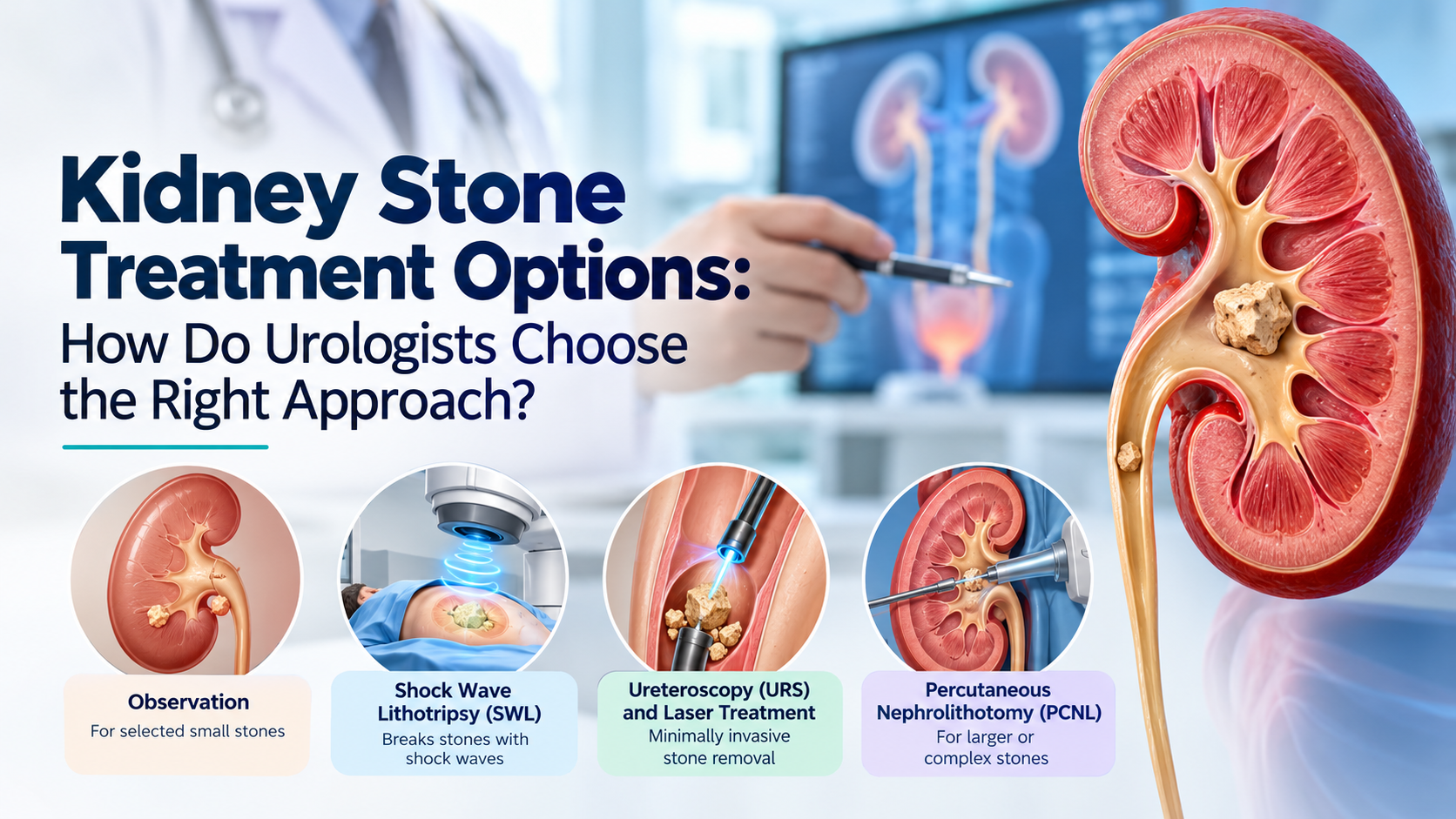
A urologist evaluates these factors before recommending observation, medication, shock-wave treatment, ureteroscopy or another suitable procedure.
How Do Urologists Choose the Right Kidney Stone Treatment?
There is no single treatment suitable for every kidney stone. A treatment plan is prepared after reviewing the patient’s symptoms, investigation reports and medical history.
Some important factors include:
- Stone size: Smaller stones may pass naturally, while larger stones are more likely to require a procedure.
- Stone location: A stone in the kidney may need a different approach from one located in the ureter.
- Urine blockage: A stone that prevents urine from draining properly may require timely intervention.
- Infection: A urinary infection along with an obstructed kidney needs urgent medical attention.
- Pain and symptoms: Repeated severe pain, vomiting or blood in the urine may influence treatment decisions.
- Overall health: Existing medical conditions, medications and previous stone treatments are also considered.
The aim is to select an appropriate treatment while considering patient safety and the possibility of future stone formation.
For more information about available care, visit the Kidney Stone Specialist in Nashik – Dr. Pranav Chhajed service page.
Can Kidney Stones Pass Naturally Without Surgery?
Yes. Some small kidney stones can pass through the urinary tract without requiring a surgical procedure.
The possibility of natural passage depends mainly on the stone’s size and location. Small stones located in the ureter may pass more easily than larger stones or stones that remain inside the kidney.
Depending on the patient’s condition, a urologist may recommend:
- Regular monitoring through imaging tests.
- Suitable pain-relief medication.
- Adequate fluid intake, if medically appropriate.
- Medicines that may help certain ureteral stones pass.
- Follow-up appointments to check whether the stone has moved or passed.
However, waiting is not appropriate in every situation. If there is an infection, significant obstruction, uncontrolled pain or deterioration in kidney function, active treatment may be necessary.
Patients should not assume that a stone has passed simply because the pain has reduced.
1. Shock Wave Lithotripsy (SWL): Breaking Stones Without an Incision
Shock Wave Lithotripsy (SWL) is a treatment that uses focused shock waves to break a kidney stone into smaller fragments. These fragments can then pass through the urinary tract in the urine.
During the procedure, the patient is positioned on a treatment table. A machine directs shock waves towards the stone using imaging guidance.
When May SWL Be Considered?
- For certain kidney stones of suitable size and location.
- When the stone can be clearly identified and targeted.
- When the stone’s characteristics are suitable for shock-wave treatment.
- When the patient’s medical condition allows the procedure.
What Should Patients Know?
SWL does not always remove a stone in one session. Some patients may require additional treatment or follow-up procedures.
The success of treatment depends on stone size, hardness, location and other patient-related factors.
2. Ureteroscopy (URS) and Laser Treatment for Kidney Stones
Ureteroscopy (URS) is a minimally invasive procedure used to locate and treat stones in the ureter or kidney.
A thin instrument called a ureteroscope is passed through the natural urinary passage. It allows the urologist to view the stone directly.
If required, a laser is used to break the stone into smaller fragments. Depending on the situation, the fragments may be removed using specialised instruments or allowed to pass naturally.
When May Ureteroscopy Be Recommended?
- When a stone is located in the ureter.
- When the stone is not passing naturally.
- When SWL is unsuitable or has not worked.
- When direct visualisation and treatment are preferred.
- For selected kidney stones that can be accessed using a flexible ureteroscope.
What Is a Ureteral Stent?
In some cases, the urologist may place a temporary ureteral stent after the procedure. This is a thin, flexible tube that helps urine drain from the kidney to the bladder.
A stent is not necessary in every uncomplicated ureteroscopy procedure. If one is placed, the doctor will explain when and how it should be removed.
3. Percutaneous Nephrolithotomy (PCNL) for Larger Kidney Stones
Percutaneous Nephrolithotomy (PCNL) is a procedure commonly used for larger or complex kidney stones.
During PCNL, the urologist makes a small incision in the patient’s back to create a passage into the kidney. A specialised instrument is inserted through this passage to locate and remove the stone.
If required, the stone is broken into smaller pieces before removal.
When May PCNL Be Recommended?
- For larger kidney stones, particularly those greater than 2 cm.
- For complex or multiple kidney stones.
- For selected staghorn stones.
- When other treatment methods are less suitable.
PCNL is performed under anaesthesia in a hospital. The recovery period and hospital stay depend on the patient’s condition, the complexity of the stone and the procedure performed.
Understanding the Difference Between Kidney Stone Treatment Options
Each procedure has a different purpose. The choice depends on clinical findings rather than simply selecting the newest or most advanced treatment.
| Treatment | How It Works | Common Consideration |
|---|---|---|
| Observation | Monitoring the stone | Selected small stones without complications |
| SWL | Uses shock waves to break the stone | Suitable size, location and stone characteristics |
| Ureteroscopy (URS) | Uses a thin scope to access and treat the stone | Ureteral and selected kidney stones |
| Laser Lithotripsy | Breaks stones using laser energy during endoscopic treatment | Used during ureteroscopy |
| PCNL | Accesses the kidney through a small incision | Larger or complex kidney stones |
No procedure is suitable for everyone. Your urologist will explain the benefits, possible risks and alternatives before treatment.
What Tests Are Needed Before Kidney Stone Treatment?
Before selecting a treatment, the urologist may recommend certain investigations to understand the stone and check kidney function.
1. Ultrasound of the KUB Region
An ultrasound helps identify kidney and bladder stones, their approximate size and location, and signs of urinary obstruction.
2. CT Scan
A non-contrast CT scan may be recommended when more detailed information is needed. It can help determine the exact size, position and density of the stone.
3. Urine Test
A urine examination helps identify blood, infection and other abnormalities. A urine culture may also be required if an infection is suspected.
4. Blood Tests
Blood investigations may include:
- Serum creatinine to assess kidney function.
- Complete blood count to check for signs of infection.
- Other tests depending on the patient’s medical history and clinical findings.
These reports help the urologist decide whether observation or active stone removal is appropriate.
When Should You Seek Urgent Medical Attention?
Some kidney stone symptoms require immediate medical evaluation. A stone that blocks urine flow along with an infection can become a serious medical emergency.
Seek urgent medical attention if you experience:
- Fever or chills along with kidney stone symptoms.
- Severe pain that does not improve with prescribed medication.
- Difficulty passing urine or inability to urinate.
- Repeated vomiting or signs of dehydration.
- Severe weakness or feeling seriously unwell.
Do not delay medical attention when these symptoms occur. An infected, obstructed kidney may require urgent drainage and medical treatment before definitive stone removal.
Questions to Ask Your Urologist Before Kidney Stone Treatment
Before deciding on a procedure, patients should understand why a particular treatment is being recommended.
Here are some useful questions to discuss:
- What is the exact size and location of my kidney stone?
- Can the stone pass naturally without a procedure?
- Is the stone blocking urine flow?
- Would SWL, ureteroscopy or PCNL be suitable in my case?
- Will laser treatment be required?
- Will I need a temporary ureteral stent?
- What are the possible risks and complications?
- How long will recovery and follow-up take?
- What steps can help prevent future kidney stones?
Understanding the treatment plan can help patients make informed decisions with their doctor.
Kidney Stone Treatment in Nashik: Consult Dr. Pranav Chhajed
Dr. Pranav Chhajed, M.S. (General Surgery), M.Ch. (Urology), is a Consulting Urologist and Andrologist in Nashik.
He provides consultation and treatment for various kidney and urinary tract conditions, including kidney stones. His areas of expertise include endourology, minimally invasive stone procedures, ESWL and laser treatment for kidney stones.
At Nephrons Kidney Care & Cure Centre, patients can undergo an evaluation to understand their condition and discuss appropriate treatment options.
If you are experiencing kidney stone symptoms or have been diagnosed with a kidney stone, consult a urologist to understand the next steps.
To learn more about the available services, visit the Kidney Stone Treatment and Specialist page.
Book an assessment to discuss your kidney stone’s size, location and suitable treatment options.
You can also visit the clinic website and appointment page to find the clinic’s contact details.
Frequently Asked Questions About Kidney Stone Treatment
1. Which Treatment Is Best for Kidney Stones?
There is no single best treatment for every patient. Small stones may pass naturally, while others may require SWL, ureteroscopy or PCNL. The decision depends on stone size, location, symptoms and overall health.
2. Can a 5 mm Kidney Stone Pass Naturally?
A 5 mm stone may pass naturally, particularly when it is located in the ureter. However, its position, shape and the patient’s condition also influence the chances of passage. Medical assessment and follow-up are important.
3. Is Laser Treatment Effective for Kidney Stones?
Laser lithotripsy is commonly used during ureteroscopy to break kidney or ureteral stones into smaller pieces. Its suitability depends on the stone’s location, size and other clinical factors.
4. What Is the Difference Between SWL and Laser Treatment?
SWL uses externally generated shock waves to break a stone into smaller fragments. Laser treatment uses laser energy delivered through an endoscope to break the stone directly. Both methods have different indications.
5. When Is PCNL Required for Kidney Stones?
PCNL is commonly considered for larger kidney stones, particularly those greater than 2 cm, and for selected complex stones. The final decision depends on the stone’s characteristics and the patient’s medical condition.
6. Can Kidney Stones Return After Treatment?
Yes. Kidney stones can develop again even after successful removal. Understanding the stone composition, maintaining appropriate fluid intake and following dietary or medical advice can help reduce the risk of recurrence.
7. Which Doctor Should I Consult for Kidney Stone Treatment in Nashik?
A qualified urologist evaluates kidney and urinary tract stones and recommends suitable treatment. Dr. Pranav Chhajed at Nephrons Kidney Care & Cure Centre provides urology consultations in Nashik.
Conclusion
Kidney stone treatment depends on more than just the size of the stone. Its location, symptoms, urinary obstruction, infection and the patient’s overall health all play an important role in selecting the right approach.

Leave a Reply