
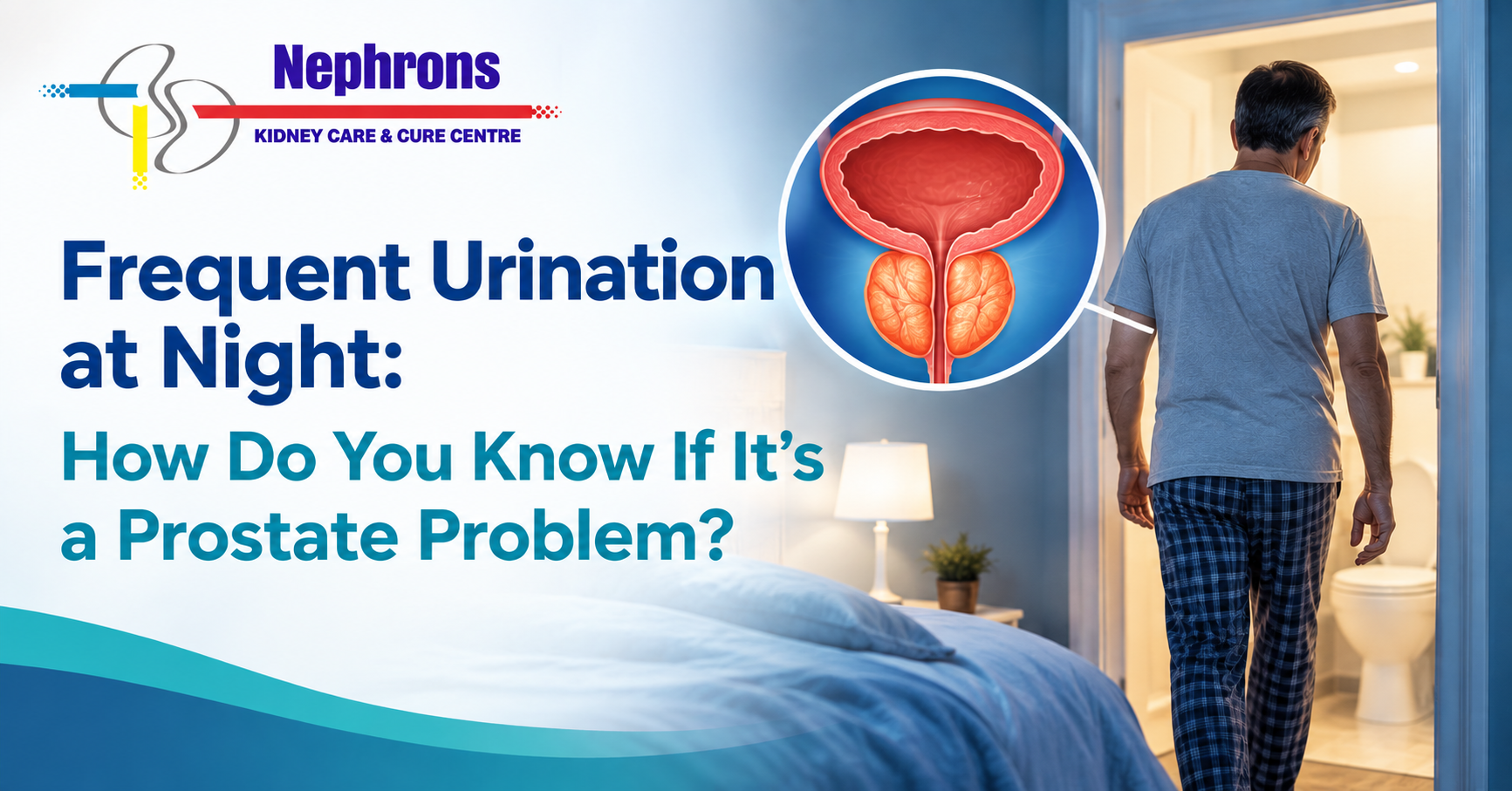
Waking up once at night to urinate may not always be a cause for concern. However, if you regularly wake up two, three, or more times, especially when it is affecting your sleep and daily routine, it is worth finding out why. Frequent nighttime urination, known as nocturia, can be associated with an enlarged prostate, particularly in older men. If you are also looking for a Kidney Specialist in Nashik, it is important to know that urinary symptoms can have several possible causes and should be properly evaluated.
An enlarged prostate, medically called benign prostatic hyperplasia (BPH), is common in men over 50. As the prostate grows, it can press on the urethra and interfere with normal urine flow. This may lead to frequent urination, urgency, a weak stream, difficulty starting urination, incomplete bladder emptying, and waking up at night to urinate. The National Institute of Diabetes and Digestive and Kidney Diseases (NIDDK) identifies nocturia as one of the symptoms that can occur with BPH.
Why Does an Enlarged Prostate Cause Frequent Urination at Night?
The prostate is a small gland located below the bladder and surrounding part of the urethra. When it becomes enlarged, it can narrow the urinary passage. This may make it harder for the bladder to empty completely.
As a result, the bladder may signal the need to urinate sooner. Some men may also develop bladder changes that contribute to urgency and frequency.
Nighttime urination can therefore occur alongside other urinary symptoms rather than appearing on its own. The NIDDK notes that prostate problems may cause frequent urination, urgency, weak urine flow, dribbling, difficulty starting urination, and incomplete bladder emptying.
However, frequent urination at night does not automatically mean you have an enlarged prostate.
6 Signs That Nighttime Urination May Be Related to Your Prostate
If you regularly wake up at night and notice several of the following symptoms, prostate enlargement may be one possible explanation.
1. You Have a Weak or Slow Urine Stream
A noticeable reduction in urine flow can occur when an enlarged prostate puts pressure on the urethra.
You may feel that urine comes out slowly or that it takes longer than before to empty your bladder. A weak stream is one of the common urinary symptoms associated with prostate problems.
2. You Have Difficulty Starting Urination
Do you stand at the toilet but have to wait before urine starts flowing?
This hesitation can be another sign of urinary obstruction. Some men may need to strain or push to begin urinating, which should not simply be dismissed as a normal part of aging.
3. You Feel That Your Bladder Has Not Completely Emptied
After urinating, you may still feel that there is urine left in your bladder.
Incomplete emptying can contribute to repeated trips to the bathroom because the bladder may fill again sooner. It can also occur with other urinary conditions, which is why evaluation is important.
4. You Need to Urinate Frequently During the Day Too
If nighttime urination is accompanied by frequent daytime trips to the bathroom, urgency, or small amounts of urine each time, it may indicate a broader lower urinary tract problem.
The NIDDK recommends medical evaluation for symptoms such as frequent urination, urgency, weak stream, difficulty maintaining urine flow, and waking frequently during sleep to urinate.
5. You Experience Dribbling After Urination
A few drops of urine may continue to leak after you think you have finished.
Post-void dribbling can occur with prostate-related urinary symptoms. If it is persistent or occurs together with weak flow and incomplete emptying, discussing it with a urologist is sensible.
6. Your Symptoms Are Gradually Getting Worse
BPH symptoms often develop gradually. You may initially wake once during the night, but over time you could find yourself waking two or three times.
The NHS notes that symptoms of an enlarged prostate can gradually worsen with age and may include increased urinary frequency, urgency, weak flow, difficulty starting urination, incomplete emptying, and nighttime urination.
Is Nighttime Urination Always a Prostate Problem?
No. This is one of the most important things to understand.
Nocturia can have several causes, including excessive fluid intake before bed, caffeine or alcohol consumption, overactive bladder, urinary tract problems, diabetes, certain medications, sleep disorders, and other health conditions. Prostate enlargement is only one possible cause.
This is why simply assuming that frequent nighttime urination is caused by BPH can delay the correct diagnosis.
For example, if you drink a large amount of water, tea, coffee, or alcohol late in the evening, you may naturally produce more urine during the night. Similarly, some medical conditions can increase urine production or affect bladder function.
A proper medical assessment helps determine the underlying reason instead of treating the symptom alone.
How Does a Best Urologist Find Out If the Prostate Is the Cause?
A Best Urologist will usually begin by asking detailed questions about your symptoms, medical history, medications, fluid intake, and how often you urinate.
Keeping a simple record of when and how often you urinate can also be useful. The NHS recommends that patients may be asked to maintain a record of fluid intake and urination for several days during evaluation.
Depending on your symptoms, evaluation may include:
- Urine testing to look for infection or other abnormalities
- Blood tests, which may include a PSA test when appropriate
- Physical examination
- Assessment of urine flow
- Ultrasound of the bladder and urinary system
- Assessment of how much urine remains in the bladder after urination
The NIDDK explains that prostate symptoms can overlap between different conditions, making medical examination and appropriate testing important for determining the cause.
When Should You See a Doctor?
You do not necessarily need to worry about an occasional nighttime bathroom visit. But persistent or worsening urinary symptoms should not be ignored.
You should consider a medical evaluation if you regularly wake up to urinate and especially if you also have:
- Weak urine flow
- Difficulty starting urination
- Frequent or urgent urination
- Dribbling after urination
- A feeling that your bladder does not empty completely
- Pain or burning while urinating
- Blood in your urine
- Increasing difficulty controlling urination
If you suddenly cannot urinate at all, seek medical attention promptly. Acute urinary retention can require urgent treatment.
Can Prostate-Related Nighttime Urination Be Treated?
Yes. Treatment depends on the underlying cause and how severe the symptoms are.
For mild symptoms, a doctor may initially recommend lifestyle changes and monitoring. This can include reducing caffeine and alcohol, managing evening fluid intake, avoiding excessive fluids close to bedtime, and addressing constipation.
If symptoms are more troublesome, medications may be prescribed. Some medicines help relax the prostate and improve urine flow, while others can reduce prostate growth in appropriate patients. Surgery or minimally invasive procedures may be considered when symptoms are severe or medicines do not provide sufficient relief.
The important point is that treatment should be based on the cause of your symptoms rather than simply treating nighttime urination.
Final Thoughts
Frequent urination at night can be frustrating, especially when it repeatedly interrupts your sleep. While an enlarged prostate is a common cause of urinary symptoms in older men, nocturia is not always a prostate problem. Other bladder, urinary, lifestyle, medication, and health-related factors can also contribute.
If you are experiencing repeated nighttime urination along with weak urine flow, difficulty starting urination, incomplete bladder emptying, urgency, or dribbling, a proper urological evaluation can help identify the cause.
Dr. Pranav Chhajed can help assess persistent urinary symptoms, evaluate possible prostate-related problems, and guide you toward appropriate treatment based on your individual condition. Consulting the Best Urologist in Nashik can help you understand whether your nighttime urination is related to prostate enlargement or another underlying urinary condition.
#ProstateHealth #ProstateProblems #FrequentUrination #Nocturia #BPH #Urology #Urologist #MensHealth #UrinaryHealth

Leave a Reply